














site logo

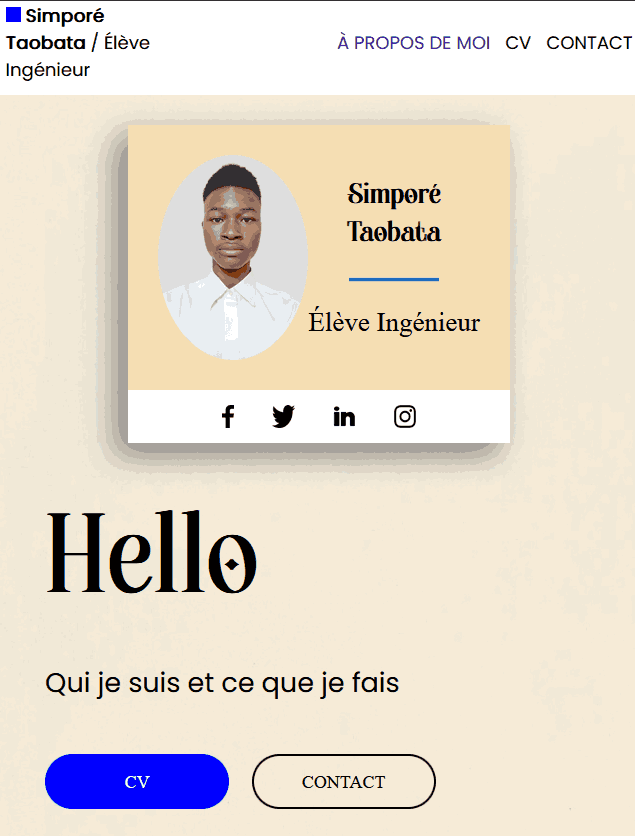
Taobata Simpore

Cybersecurity
Embedded systems
Front-end development

Use desktop view for full experience

illustrative image illustrative image a photo of me

Swipe up

image of navigation section tiltle support

About Me

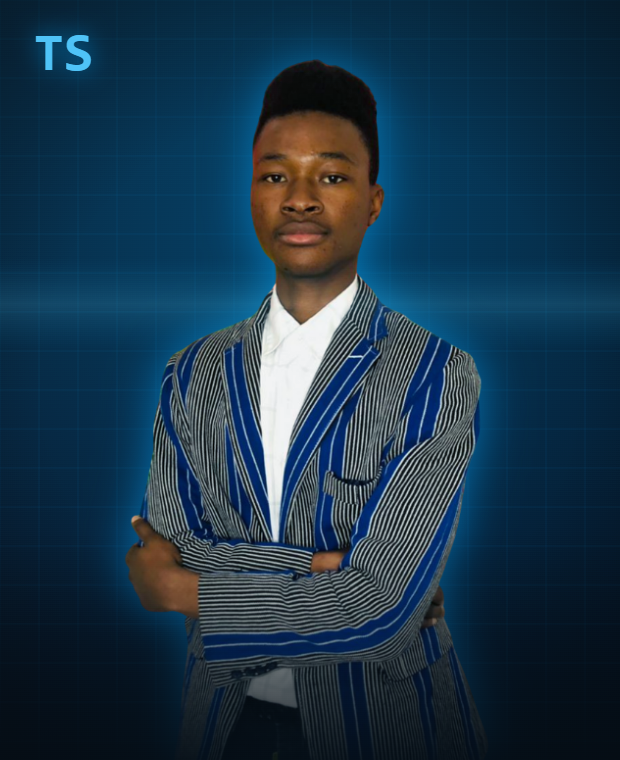
a photo of me

Personal Overview

Hailing from Burkina Faso, I am a 23-year-old engineering student currently based in Morocco. I am pursuing my degree in Cybersecurity and Embedded Systems at ENSA Tetouan, where I bridge the gap between hardware security and software resilience. Beyond my core technical focus, I am a creative front-end developer and designer, dedicated to building secure, intuitive, and visually compelling digital experiences.

Explore my portfolio to discover how I merge technical rigor with creative innovation.

image of navigation
section tiltle support

Education

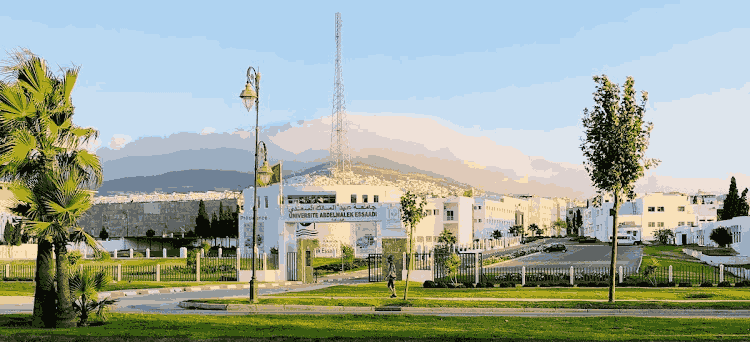
image of ENSA
ENSA - Tetouan

ENSA - TETOUAN | 2024 - Currently | Engineering Cycle

A cycle of three years studies in cybersecurity and embedded systems.
More information on the official site of ENSATE.

ENSA - TETOUAN | 2022 - 2024 | Preparatory Cycle

Two years of preparatory studies for the Engineering Cycle.
More information on the official site of ENSATE.

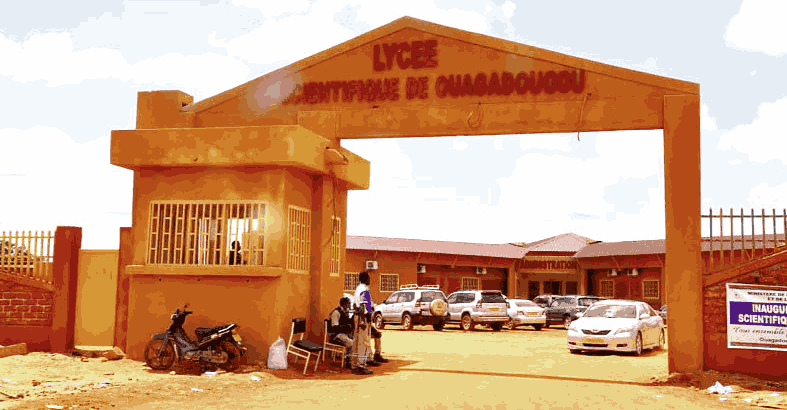
image of lsno
LSNO

LYCÉE SCIENTIFIQUE NATIONAL DE OUAGADOUGOU | 2019 - 2022 | High School Degree

Scientific High School Degree (C) obtained in Burkina Faso with honors (BIEN).
More information on the official site of LSNO.

image of navigation
section tiltle support

Skills

decorative image decorative image decorative image

Cybersecurity

Penetration testing
Security testing
Computing
Computer networking
Malware analysis

Embedded systems

FPGA
VHDL
Verilog
ESP32
Arduino
Circuits design

Web and Software Development

JavaScript
ReactJs
HTML 5
CSS 3
Python
Java
C

Other skills

Figma
Canva
MS Suite
Windows
Linux
discipline
leadership
management
...
image of navigation
section tiltle support

Experience

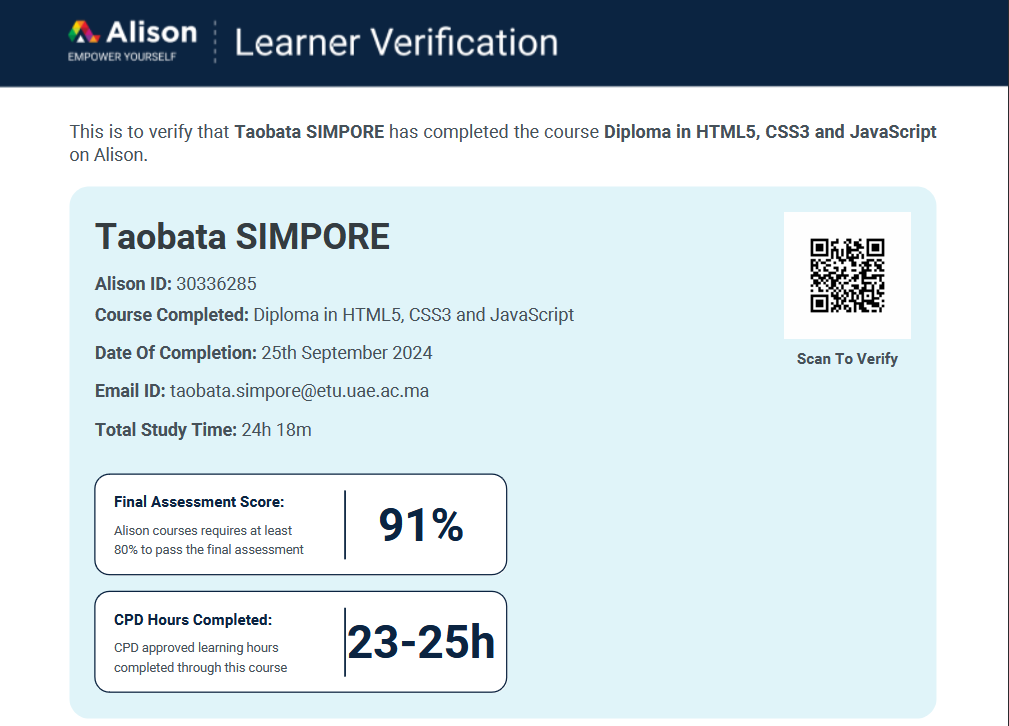
EP Manager – OGX-OGT, AIESEC in Tangier | 02/2025 – 07/2025

decorative image AIESEC is a global youth-led organization focused on leadership development through international exchanges. As an Experience Participant (EP) Manager for Outgoing Global Talent, I managed and coordinated international internship programs, helping young professionals secure impactful opportunities abroad.

Club CoderSphere - O'dace | 01/2025 - 05/2025

decorative image CoderSphere is a technology hub dedicated to robotics, embedded systems, and cybersecurity. Through hands-on projects, I deepened my expertise in electronics and hardware design while strengthening my technical problem-solving and teamwork skills in a collaborative environment.

Secrétaire Général Adjoint (SGA), AEBM - Tetouan | 10/2023 - 10/2024

decorative image The AEBM supports Burkinabé students in Morocco through integration and guidance. During my tenure as Deputy Secretary General, I oversaw administrative tasks and coordinated community projects, significantly enhancing my leadership, organizational, and cross-cultural communication abilities.

image of navigation
section tiltle support

Services

decorative image decorative image decorative image

Security testing

Evaluate and enhance the resilience of your systems by identifying vulnerabilities and implementing measures to protect against potential threats.

Penetration testing

Simulate real-world attacks on your IT infrastructure to discover security weaknesses before malicious actors can exploit them.

Network management

Ensure seamless operation and security of your network infrastructure with proactive monitoring, maintenance, and optimization services.

Website front-end development

Create modern, responsive, and user-friendly web interfaces that ensure an engaging experience for your audience across all devices.

Design

Deliver innovative and visually appealing designs tailored to your brand identity and business needs, boosting your online presence.

Other services

Tailor-made solutions designed to meet your unique requirements, ensuring maximum satisfaction and effective results.

image of navigation
section tiltle support

Portfolio

illustrative image
Preparatory Cycle Project

Preparatory Cycle Project

Description

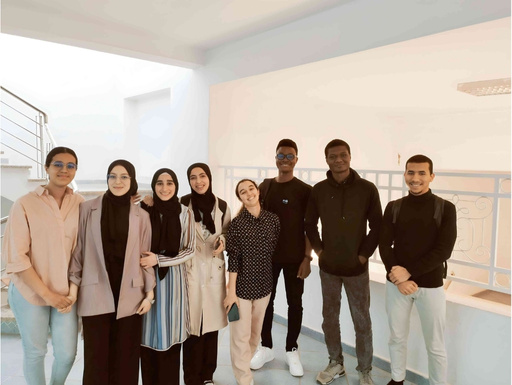
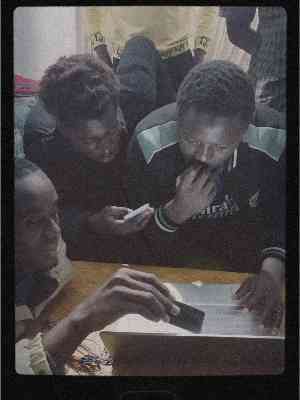
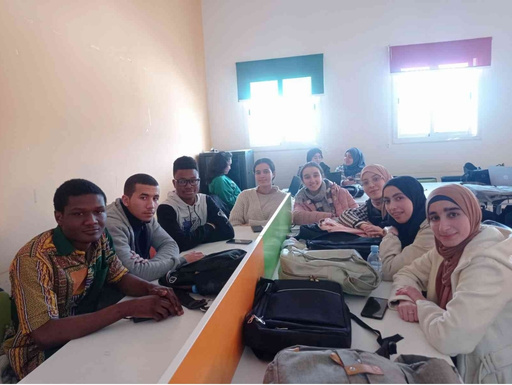
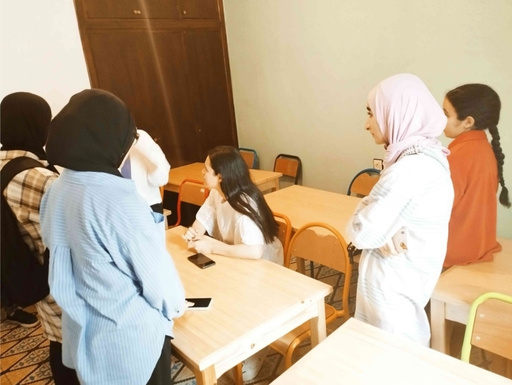
During our two-year preparatory cycle, we carried out our first university project. The aim of the project was to introduce us to the professional world. In a team of five, our project involved renovating the study room of an orphanage, organizing eating sessions with the orphans, and providing them with tutoring sessions. To achieve this, we first raised a budget of approximately 6,500 Moroccan dirhams.

Resources

Some images of the project.
illustrative image illustrative image illustrative image
image of navigation
Ingeneering Cycle Projects

Ingeneering Cycle Projects

Description

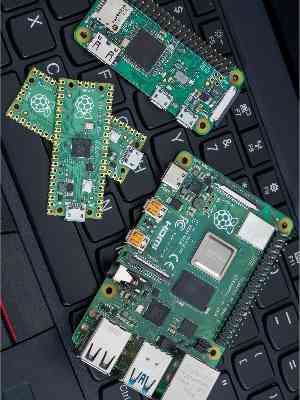
During the engineering cycle, we work on many projects, almost in every module. In our field, which is cybersecurity and embedded systems, our projects combine both aspects simultaneously.

Resources

Some aspects of the projects.
illustrative image illustrative image illustrative image
illustrative image
Marathon 1 CoderSphere

Marathon 1 CoderSphere

Description

This was our first project in the Codersphere club. We approached it as a challenge to see who would finish it successfully first. The project involved coding the front-end of a website based on a design created on Canva. The aim of the challenge was to test our knowledge in web development, specifically in HTML and CSS. We carried out the challenge on November 11, 2023. I won this first challenge by finishing it first in 5 hours.

Resources

Some images of the website.
illustrative image illustrative image illustrative image
illustrative image
Marathon 2 CoderSphere

Marathon 2 CoderSphere

Description

This was our second project in the Codersphere club. We also approached it as a challenge to see who would finish it successfully first. The project involved coding the front-end of a personal portfolio. The aim of the challenge was to test our knowledge in web development, specifically in HTML and CSS. We carried out the challenge on November 11, 2023. I finished third at this challenge.

Resources

Some images of the website.
illustrative image illustrative image illustrative image
illustrative image
Projects O'dace

Projects O'dace

Description

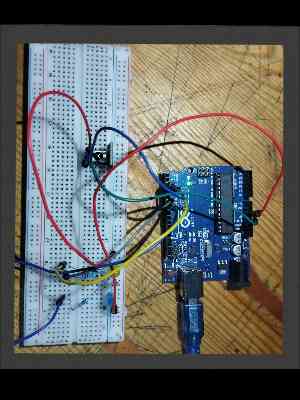
In the O'dace club, I take part in electronics projects. Our first projects were Arduino-based. Through these projects, we learned to work with various electronic components and to build several standard electronic circuits. It is through activities like these that we successfully apply the theoretical knowledge we gain at university.

Resources

Some images of the activities.
illustrative image illustrative image illustrative image
illustrative image
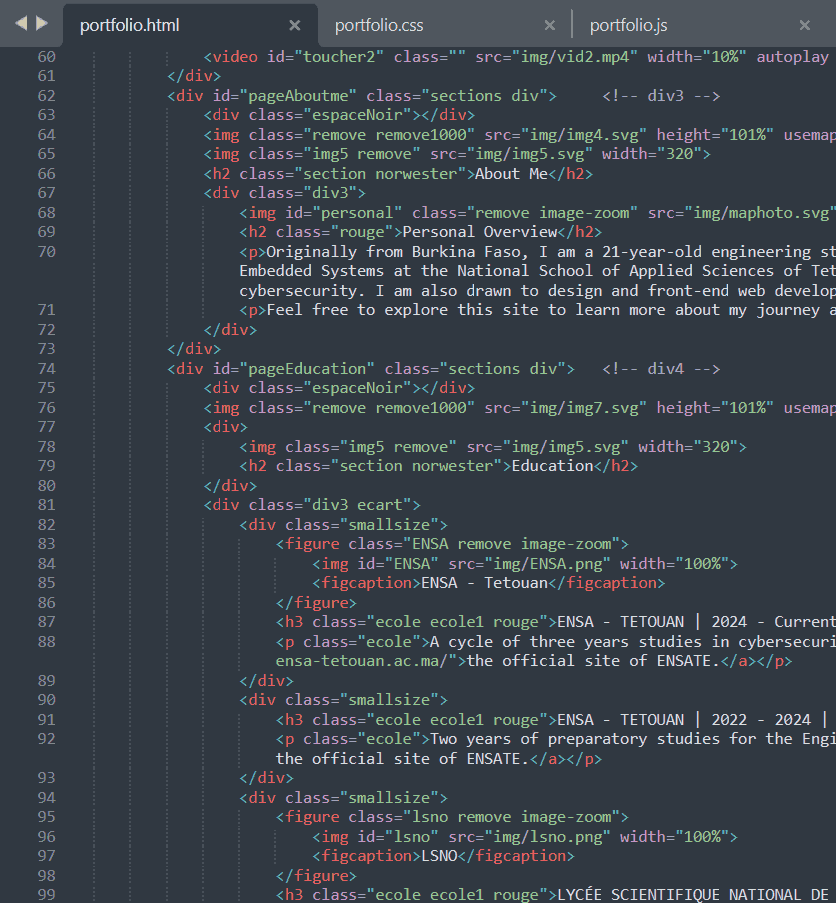
Portfolio Project

Portfolio Project

Description

Driven by the desire to create my own portfolio website to showcase my various achievements throughout my journey, I started coding. On this site, I included personal information, details about my academic and university background, my skills, certifications, professional experience, the services I offer, completed projects, and my contact information—in short, everything typically found on a portfolio website.

Resources

Some images of the website.
illustrative image illustrative image illustrative image
section tiltle support

HePRAS Healthcare System

Overview

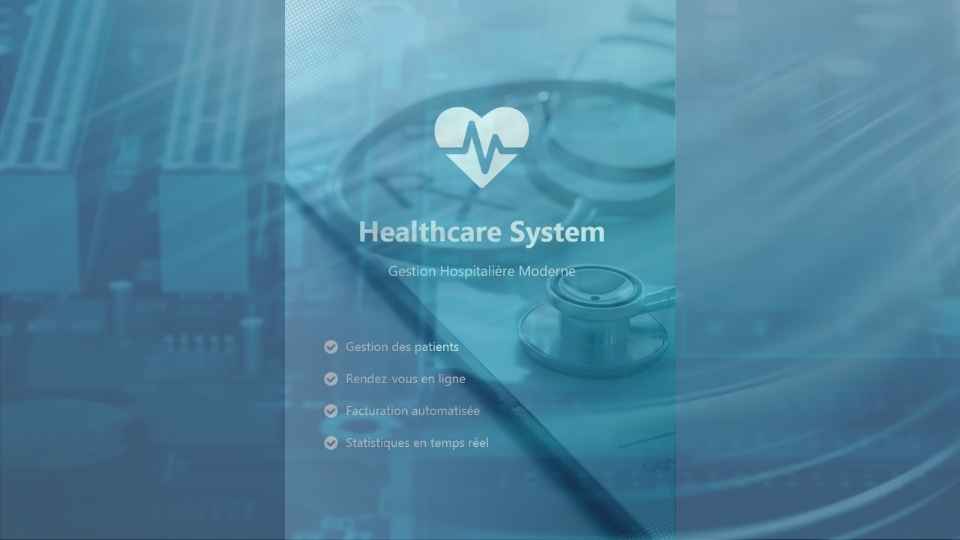
HePRAS (Healthcare Practice Management System) is a comprehensive database management application developed during the "Administration Bases de Données" module. This solution streamlines the daily operations of medical practices by centralizing patient records, appointments, consultations, billing, and staff management.
Built with Oracle Database 21c and Java Swing, the system implements role-based access control to ensure data security while maintaining an intuitive user experience for medical staff.

Application interface

Objective

    In medical environments, inefficient data management leads to:

    • Lost patient records
    • Appointment conflicts and no-shows
    • Billing errors and revenue loss
    • Compromised patient confidentiality

    Our goals were to:

    • Centralize all medical practice data in a secure, relational database.
    • Automate appointment scheduling and invoice generation.
    • Implement role-based permissions (Admin, Doctor, Nurse, Secretary, Accountant).
    • Ensure data integrity and HIPAA-aligned security practices.

    This project demonstrates how database architecture and software design work together to solve real-world healthcare challenges.

Features

  1. Patient Management
    • Complete patient registration with medical history
    • Instant search and retrieval of patient records
    • Full consultation history tracking
  2. Appointment Scheduling
    • Real-time calendar view for all medical staff
    • Conflict detection and automatic notifications
    • Support for recurring appointments
  3. Medical Consultations
    • Structured documentation (symptoms, diagnosis, prescriptions)
    • Digital prescription generation
    • Complete patient journey tracking
  4. Billing & Invoicing
    • Automatic invoice generation from consultations
    • Payment tracking and financial reporting
    • Multi-service pricing configuration
  5. Staff Management
    • Doctor profiles with specialties and schedules
    • Role-based dashboard customization
    • Activity logs for audit trails
  6. Role-Based Access Control
    • Admin: Full system access and configuration
    • Doctor: Consultations, prescriptions, appointments
    • Secretary: Patient registration, scheduling
    • Patient: Read-only access to his own data

Technologies Used

  1. Backend & Database
    • Oracle Database 21c: Enterprise-grade RDBMS with PL/SQL stored procedures
    • JDBC: Java Database Connectivity for seamless integration
    • PL/SQL, SQL Developer: Database design and optimization
  2. Frontend
    • JavaFX
    • FXML
    • CSS
  3. Security
    • SHA-256 Password Hashing: Secure credential storage
    • Prepared Statements: SQL injection prevention
    • Session Management: User authentication and authorization/li>
  4. Architecture
    • MVC Pattern: Clean separation of concerns
    • DAO Layer: Database abstraction
    • Entity Classes: Object-relational mapping

Database Design Highlights

  • 9 interconnected tables: Patients, Appointments, Consultations, Invoices, Doctors, Users, Roles, Services, Payments
  • Triggers: Auto-generating invoice IDs and timestamps
  • Views: Pre-configured queries for role-specific dashboards
  • Indexes: Optimized search performance on frequently queried fields

Results & Demonstration

Below is a video demonstration showcasing the key features:

Aperçu de la vidéo

Team Members:

  • Taobata SIMPORE
  • Abdoul-Moumouni
    DIALLO
  • Daniel KUNAKA

Resources of the project here : github

section tiltle support

Brainwave Intership Projects

Overview

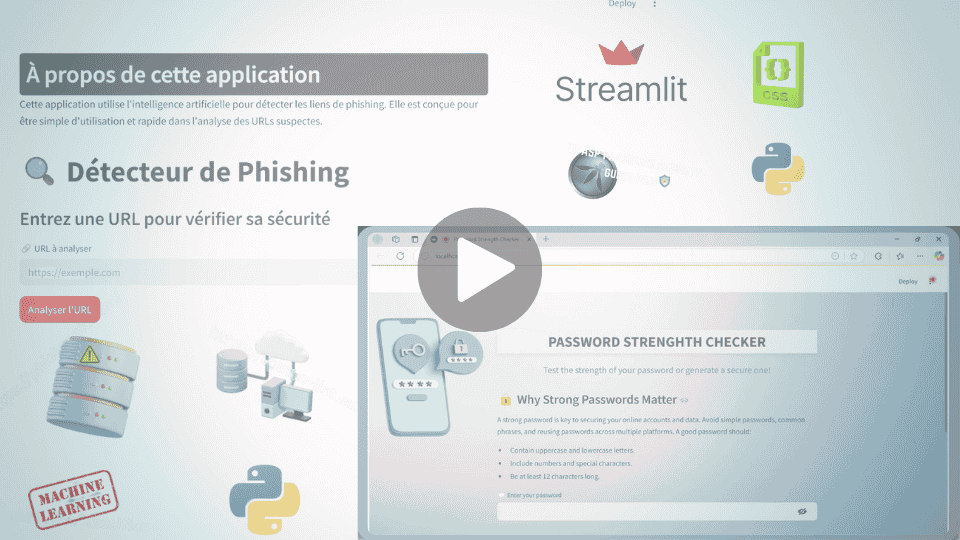
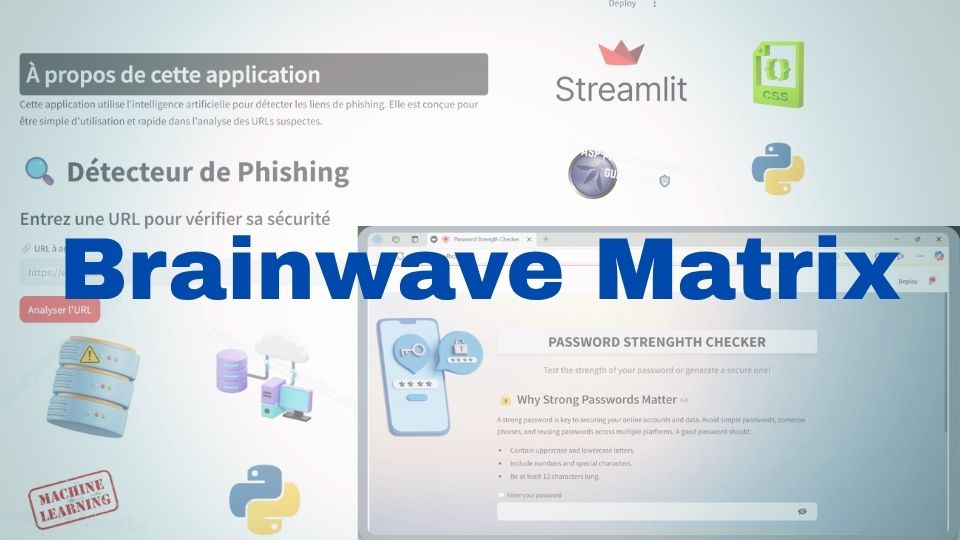
During my cybersecurity internship at Brainwave Matrix, I successfully developed two key projects that aim to enhance digital security, user awareness, and secure authentication methods. Each project demonstrates my ability to combine software development, cybersecurity analysis, and interactive design to create useful and engaging security tools.

Brainwave internship

Project 1: Phishing URL Scanner

Objective

Phishing attacks are one of the most prevalent cybersecurity threats today. They exploit users by tricking them into visiting fraudulent websites that steal sensitive information. To combat this, I built a Phishing URL Scanner, a tool that quickly determines whether a given URL is legitimate or malicious.

How It Works

  • Real-time URL analysis: The tool takes user-provided URLs and evaluates them using security databases.
  • Pattern recognition: Detects red flags like domain misspellings, IP-based links, and common phishing indicators.
  • Threat classification: Categorizes URLs into safe, suspicious, or malicious based on various security markers.
  • Integration with known phishing databases: Cross-references URLs with a blacklist of phishing websites to ensure accurate detection.

Outcome & Impact

  • Enables users to verify links before clicking, preventing potential phishing attacks.
  • Provides educational feedback on what makes a link suspicious.
  • Improves cybersecurity awareness by showing users why certain URLs may be dangerous.
  • Built using Python and integrated with security databases for accuracy.

Technologies Used

  • Programming & Backend: Python, Flask, Streamlit.
  • Data Processing & ML: pandas, scikit-learn, under-sampling, hyperparameter tuning.
  • Security Analysis: tldextract, regex, requests.
  • Threat Intelligence: Known phishing databases.

Video Presentation

Check out this live demonstration

Aperçu de la vidéo

Resources of the project here : my github

Project 2: Password Strength Checker

Objective

Passwords are the first line of defense against unauthorized access. Weak passwords leave accounts vulnerable to brute-force attacks and credential stuffing. To help users create and validate strong passwords, I built a Password Strength Checker, a tool that assesses password security and provides real-time feedback.

How It Works

  • Strength analysis: Evaluates passwords based on length, complexity, and uniqueness.
  • Interactive UI: Real-time validation using Streamlit, offering a color-coded indicator (red/orange/green) for password security levels.
  • Secure password generator: Allows users to generate strong passwords with customizable length & complexity preferences.
  • Educational feedback: Guides users on how to improve weak passwords with immediate suggestions.

Outcome & Impact

  • Makes password security more accessible & understandable for users.
  • Created a user-friendly application with an intuitive design.
  • Encourages better security habits by providing educational tips.
  • Designed using Python, Streamlit, and UI/UX optimization techniques.

Technologies Used

  • Python → Core programming language for security analysis.
  • Streamlit → Interactive framework for real-time password validation.
  • Base64 → Used for custom background implementation.
  • Security Guidelines → Principles aligned with OWASP password standards for secure authentication.

Video Presentation

Check out this live demonstration

Aperçu de la vidéo

Resources of the project here : my github

section tiltle support

Parking System with VHDL

Overview

Intelligent Parking System with VHDL is an academic FPGA-based project developed as part of the module "Programmation FPGA". This system implements a complete parking management solution using hardware description language (VHDL) deployed on an FPGA development board.
The system combines real-time vehicle tracking, automated barrier control, dynamic occupancy display, and safety mechanisms to create an efficient and secure parking management infrastructure. By leveraging modular digital design principles and finite state machines, the project demonstrates practical applications of FPGA technology in smart infrastructure.

Illustration

Objective

    With modern urban environments, parking management presents significant challenges related to space optimization, traffic flow, and user safety. Our main objectives for this project were to:

    • Automate vehicle entry and exit with real-time capacity monitoring.
    • Implement safety-first barrier control to prevent accidents.
    • Provide clear visual feedback on parking availability through dynamic displays.
    • Design a modular, scalable VHDL architecture suitable for FPGA synthesis.
    • Apply theoretical knowledge of digital systems design to a practical embedded solution.

    This project demonstrates the practical implementation of FPGA programming concepts, offering a real-world application of hardware description languages in intelligent infrastructure systems.

Hardware Components to use

  1. FPGA Development Board
    • Platform: Altera Cyclone / Xilinx Artix series.
    • System Clock: 50 MHz on-board oscillator for timing and synchronization.
    • Programming Interface: JTAG for bitstream configuration.
  2. Sensors & Detection
    • Entry/Exit Sensors: Inductive loop detectors or HC-SR04 ultrasonic sensors to detect vehicle presence at entry and exit points.
    • Passage Sensor: IR break-beam sensor positioned under the barrier for safety interlock detection.
    • Limit Switches: Mechanical switches to detect barrier fully open and fully closed positions.
  3. Actuators & Display
    • Barrier Motor: DC motor controlled via L298N H-Bridge driver for opening and closing operations.
    • 4-Digit 7-Segment Display: Multiplexed display showing real-time count of available parking spots.
  4. Circuit Integration
    • The FPGA interfaces with sensors through digital input pins and controls the motor driver and display through dedicated output pins, creating a complete hardware-software integration.

Software Architecture

    The VHDL design follows a hierarchical, modular architecture with clear separation of concerns across four main components:

    1. Top Level Controller (top_parking)
      • Central coordinator managing all system modules and global logic.
      • Generic parameter: MAX_PLACES defines total parking capacity.
      • Entry Logic: Authorizes entry only when sensor_entry = '1' AND available_spots > 0.
      • Exit Logic: Always permits exit to prevent system deadlock (sensor_exit = '1' triggers exit).
    2. Parking Counter Module (counter_block)
      • Bidirectional counter maintaining data integrity.
      • Decrements count on valid entry (available_spots - 1).
      • Increments count on valid exit (available_spots + 1).
      • Outputs current available spots to both display controller and top-level logic.
    3. Barrier Control FSM (barrier_control)
      • Finite State Machine with five distinct states: IDLE, OPENING, OPEN, WAITING_PASSAGE, CLOSING.
      • Safety interlock: Cannot transition to CLOSING state while sensor_passage is HIGH (vehicle detected under barrier).
      • Motor control: Drives H-Bridge inputs based on current FSM state and limit switch feedback.
      • State transitions based on sensor inputs and timer conditions.
    4. Display Controller (display_block)
      • Converts binary spot count to Binary-Coded Decimal (BCD) format.
      • Implements multiplexing logic for 4-digit 7-segment display.
      • Uses system clock to cycle through digits rapidly, creating persistence of vision effect.
      • Cathode outputs drive segment patterns (a-g), anode outputs select active digit.

System Operation & Control Logic

    The intelligent parking system operates through coordinated interaction between all modules:

    1. Entry Scenario:
      • Driver arrives at entry point, triggering sensor_entry.
      • Top-level logic checks if available_spots > 0.
      • If capacity available, barrier FSM transitions to OPENING state.
      • Barrier opens until limit_open switch is activated.
      • BSystem waits for vehicle passage (sensor_passage HIGH then LOW).
      • Barrier closes after vehicle clears (sensor_passage returns to LOW).
      • Counter decrements available spots by 1.
    2. Exit Scenario:
      • Driver triggers sensor_exit.
      • Exit is always authorized (deadlock prevention logic).
      • Barrier opens following same FSM sequence.
      • Counter increments available spots by 1 after vehicle exits.
    3. Safety Mechanisms:
      • Hardware interlock prevents barrier closure while vehicle is underneath.
      • Capacity enforcement blocks new entries when parking is full.
      • Independent exit authorization ensures vehicles can always leave.

Key Features

  • Automatic Vehicle Counting: Real-time bidirectional tracking of parking occupancy with entry decrement and exit increment logic.
  • Capacity Management: System automatically denies entry when places_disponibles = 0, preventing overcrowding.
  • Safety-First Design: Barrier control FSM includes hardware interlock logic preventing closure when obstacle detected.
  • Real-Time Visual Feedback: Multiplexed 4-digit 7-segment display continuously shows available parking spots.
  • Deadlock Prevention: Exit operations are always authorized regardless of system state, ensuring smooth traffic flow.
  • Modular Architecture: Clear separation of concerns across counter, FSM, display, and top-level modules enables easy maintenance and scalability.

Technologies Used

  • VHDL: Hardware description language for all digital logic implementation.
  • FPGA: Field-Programmable Gate Array platform (Altera Cyclone / Xilinx Artix series).
  • Digital Design Principles: Finite state machines, synchronous sequential logic, combinational logic.
  • Clock Management: 50 MHz system clock with proper timing constraints.
  • Sensor Integration: Digital input interfacing for inductive loops, ultrasonic sensors, and IR detectors.
  • Motor Control: H-Bridge driver integration for DC motor actuation.
  • Display Multiplexing: Time-division multiplexing for multi-digit 7-segment display.

Team Members:

  • Taobata SIMPORE
  • Abdoul-Moumouni
    DIALLO
  • Daniel KUNAKA
  • Doha BOUARRAF
  • Yousra MAKRI
  • Malak EL BAROUDI
  • Hafsa MOUHAFID
  • Laila SABOR

Resources of the project here : github

section tiltle support

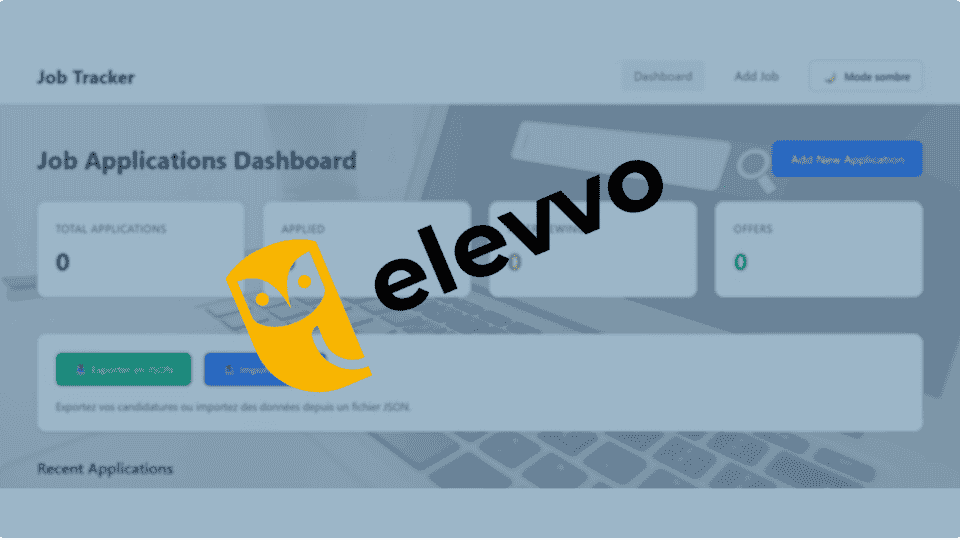
React Job Application Tracker

Overview

Job Application Tracker is a comprehensive web application designed to help job seekers efficiently organize, track, and manage their job applications. Built with React, the application leverages a modular component architecture and centralized state management through React Context API to deliver a seamless and consistent user experience.
This tool addresses a common challenge faced by job seekers: keeping track of multiple applications across different platforms, stages, and timelines. With visual insights, advanced filtering, and data portability features, the application transforms the job hunting process into a structured and manageable workflow.

Application interface

Objective

    In an increasingly competitive job market, managing numerous applications simultaneously can become overwhelming. The main objectives of this project were to:

    • Provide a centralized platform to track all job applications in one place.
    • Offer visual insights through charts and statistics to monitor application progress.
    • Enable advanced search and filtering capabilities for quick access to specific applications.
    • Allow data export and import for backup, migration, and sharing purposes.
    • Create an intuitive, user-friendly interface with theme customization options.

    This project demonstrates the practical application of modern web development principles, delivering a real-world solution for personal productivity and career management.

Key Features

  1. Dashboard & Analytics
    • Interactive dashboard with overview statistics of all job applications.
    • Visual data representation using pie charts and bar graphs powered by Recharts library.
    • Real-time updates reflecting the current status of applications (pending, interview, rejected, accepted).
  2. Application Management
    • Real-time calendar view for all medical staff
    • Conflict detection and automatic notifications
    • Support for recurring appointments
  3. Medical Consultations
    • Add Job: Dedicated form interface for creating new job application entries with details like company name, position, status, and application date.
    • Edit & Details: Modify existing applications and view comprehensive details through an intuitive job details page.
    • Status Tracking: Monitor the progress of each application through different stages of the hiring process.
  4. Search & Filter System
    • Advanced search functionality to locate specific applications by company name, position, or status.
    • Multi-criteria filtering system for refined results.
    • Sort options to organize applications by date, company, or status.
  5. Data Portability
    • Export functionality: Download all application data in JSON format for backup or analysis.
    • Import functionality: Upload previously exported data or migrate information from other sources.
    • Data persistence to ensure no loss of information between sessions.
  6. User Experience Enhancements
    • Theme Toggle: Switch between light and dark modes for comfortable viewing in any environment.
    • Responsive design ensuring optimal display across desktop and mobile devices.
    • Clean, professional interface with intuitive navigation.

Technologies Used

  • React: Core framework for building the user interface with component-based architecture.
  • React Context API: Centralized state management for global data handling across components.
  • Recharts: Data visualization library for creating interactive charts and graphs.
  • Modular Architecture: Separation of concerns with dedicated folders for components, context, and styles.

Results & Demonstration

Below is a video demonstration showcasing the key features:

Aperçu de la vidéo

Resources of the project here : github

section tiltle support

Forest Fire Detection System

Overview

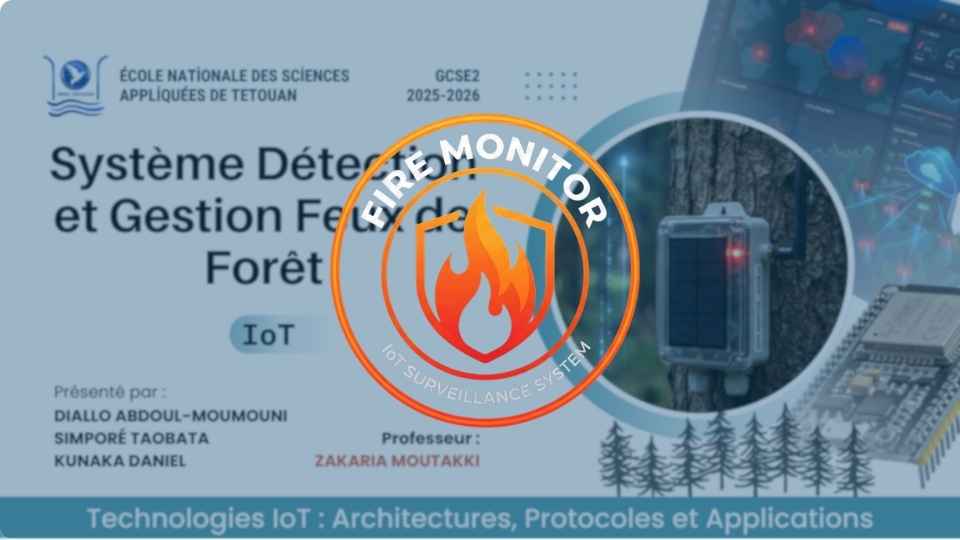
Proactive Forest Fire Detection & Management System is a comprehensive IoT solution developed as part of the module "Architecture des technologies IoT". This end-to-end system integrates edge computing, machine learning, and web technologies to create an intelligent early warning system for forest fire detection and management.
By combining real-time sensor data acquisition through ESP32 microcontrollers, intelligent risk assessment using Random Forest machine learning algorithms, and secure web-based monitoring dashboards, the system provides a complete solution for proactive fire detection in forest or building environments. The architecture emphasizes reliability, scalability, and accurate discrimination between genuine fire threats and environmental false alarms.

Illustration

Objective

    Forest fires pose significant threats to ecosystems, property, and human lives, with early detection being critical for effective response. Traditional detection methods often suffer from high false alarm rates and delayed response times. Our main objectives for this project were to:

    • Develop a real-time monitoring system capable of continuous environmental surveillance.
    • Implement intelligent risk assessment to distinguish between actual fires and benign environmental conditions (hot weather, humidity fluctuations).
    • Create a scalable IoT architecture supporting multiple distributed sensor nodes.
    • Design a secure, user-friendly web interface for real-time visualization and administrative control.
    • Apply machine learning techniques to improve detection accuracy and reduce false positives.

    This project demonstrates the practical integration of IoT architecture principles, embedded systems programming, cloud connectivity, and data analytics to address real-world environmental monitoring challenges.

Hardware Components

  1. Microcontroller & Processing
    • ESP32 Dev Kit V1: Dual-core 32-bit processor with built-in Wi-Fi (2.4GHz) for wireless connectivity and local data processing.
    • Edge Computing Capability: Pre-processing and data normalization performed locally before cloud transmission.
  2. Sensors
    • MQ-2/MQ-135 Gas Sensors: Analog sensors detecting combustible gases, smoke, and air quality indicators.
    • DHT11/DHT22: Digital temperature and humidity sensors providing environmental baseline readings.
    • IR Flame Sensor (Optional): Additional verification layer for flame detection.
  3. Sensor Integration
    • Analog-to-Digital Conversion (ADC): ESP32 reads raw sensor values and applies software-based calibration mapping.
    • Multi-sensor fusion combines temperature, humidity, and gas readings for comprehensive environmental assessment.

Software Architecture

    The system follows a modular, layered architecture with clear separation between edge devices, processing middleware, and user interfaces:

    1. Edge Layer (ESP32 Firmware)
      • Developed using VS Code with PlatformIO framework (C++).
      • Sensor Reading Logic: Periodic sampling of temperature, humidity, and gas sensors with configurable intervals.
      • Data Serialization: JSON formatting of sensor readings with node identification and timestamps.
      • MQTT Publishing: Reliable message transmission to central broker using Paho-MQTT protocol.
      • Auto-Calibration: Software mapping of raw ADC values to standardized ranges compatible with ML model.
    2. Transport Layer (MQTT Broker)
      • Mosquitto MQTT Broker: Lightweight publish-subscribe messaging protocol ensuring low-latency communication.
      • Topic Structure: Hierarchical topics for scalable multi-node deployment (sensors/node_id/data).
      • Quality of Service: Configurable QoS levels for guaranteed message delivery.
    3. Processing Layer (ML Gateway)
      • Python-based orchestrator acting as MQTT subscriber and database writer.
      • Random Forest Classifier: Pre-trained machine learning model (fire_model.pkl) for fire risk prediction.
      • Model Training: Scikit-learn implementation trained on fire_data.csv dataset with features including temperature, humidity, and smoke levels.
      • Data Normalization: Standardization of incoming sensor data to match training distribution.
      • Risk Assessment: Real-time probability calculation for fire presence with configurable alert thresholds.
      • MySQL Integration: Persistent storage of raw readings, predictions, and alert statuses with timestamp indexing.
    4. API Layer (REST Backend)
      • Remote REST API exposing sensor data and analytics endpoints.
      • Database Abstraction: Query interface for historical data retrieval and real-time status.
      • Authentication Service: JWT-based token generation for secure client access.
    5. Application Layer (Flask BFF)
      • Backend-for-Frontend Pattern: Flask proxy server handling authentication and API requests.
      • Security Architecture: JWT tokens managed server-side, never exposed to browser localStorage.
      • Session Management: Server-maintained sessions with automatic logout on token expiration.
      • Proxy Routing: Authorization header injection for all upstream API calls.

Web Dashboard Features

  1. Interactive Mapping
    • LeafletJS Integration: Geographic visualization of sensor node locations.
    • Status Indicators: Color-coded markers (Green = Normal, Red = Fire Alert) for quick status assessment.
    • Real-Time Updates: Dynamic marker updates reflecting current system state.
  2. Data Visualization
    • Chart.js Analytics: Historical trend visualization for temperature, humidity, and gas levels.
    • Node-Specific Views: Click-to-view detailed graphs for individual sensor nodes.
    • Time-Series Analysis: Configurable time ranges for historical data exploration.
  3. Administrative Interface
    • User Management: Role-based access control with admin and standard user privileges.
    • Node Configuration: Remote sensor node registration and parameter adjustment.
    • Alert Configuration: Customizable threshold settings for fire risk detection.

System Operation & Data Flow

    The complete data pipeline operates through the following sequence:

    1. Data Acquisition:
      • ESP32 reads analog sensor values at configured intervals (e.g., every 5 seconds).
      • Raw ADC values undergo software calibration to physical units (temperature in °C, humidity in %, gas in PPM).
      • Data is packaged into JSON format with node_id, timestamp, and sensor readings.
    2. Data Transmission:
      • ESP32 publishes JSON payload to MQTT broker on designated topic.
      • Mosquitto broker receives and queues messages for subscriber delivery.
      • Python Gateway subscribes to sensor topics and receives data streams.
    3. Intelligent Processing:
      • Gateway extracts sensor values from JSON payload.
      • Values are normalized using same scaler used during model training.
      • Random Forest model predicts fire probability (0.0 to 1.0).
      • Alert status determined based on configurable threshold (e.g., >0.75 triggers alert).
    4. Data Persistence:
      • Complete record (raw data + prediction + alert status) written to MySQL database.
      • Timestamp indexing enables efficient historical queries.
      • Database tables structured for scalable multi-node deployment.
    5. User Access:
      • Web dashboard requests data via Flask BFF proxy.
      • BFF authenticates user, injects JWT token, forwards request to REST API.
      • API queries database and returns formatted response.
      • Frontend renders data on interactive map and charts.

Technologies Used

  • Embedded Development: VS Code, PlatformIO, C++ for ESP32 firmware.
  • IoT Communication: MQTT (Mosquitto Broker), Paho-MQTT client libraries.
  • Machine Learning: Python, Scikit-learn, Pandas, Joblib for Random Forest classifier.
  • Backend: Python, Flask (BFF), REST API architecture.
  • Database: MySQL for sensor data persistence and historical logging.
  • Frontend: HTML5, CSS3, JavaScript, LeafletJS for mapping, Chart.js for data visualization.
  • Security: JWT (JSON Web Tokens) for authentication and authorization.
  • Hardware: ESP32 microcontroller, MQ-2/MQ-135 gas sensors, DHT11/DHT22 temperature/humidity sensors.

Video Presentation

Below is a video demonstration showcasing the key features:

Aperçu de la vidéo

Team Members:

  • Taobata SIMPORE
  • Abdoul-Moumouni
    DIALLO
  • Daniel KUNAKA

Resources of the project here : github

section tiltle support

Travel Agency Project

Overview

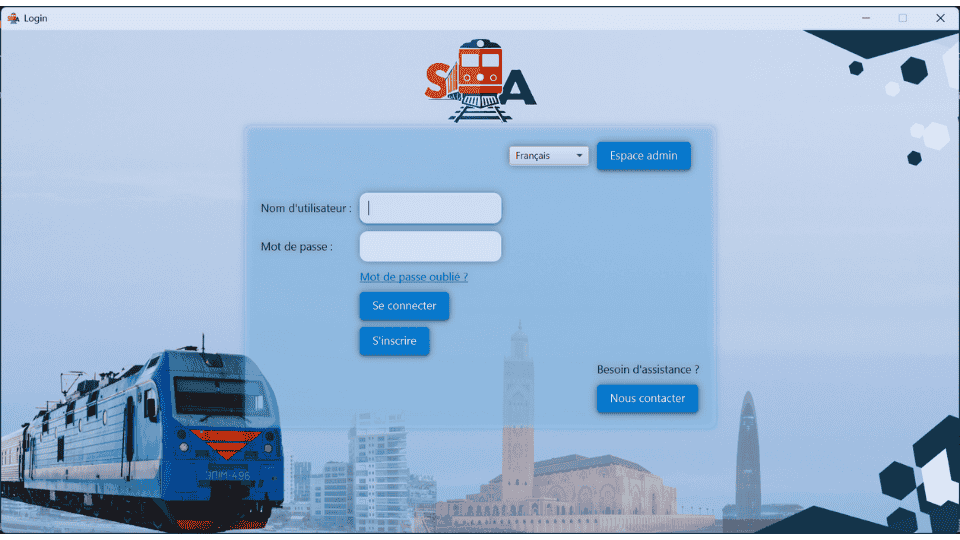
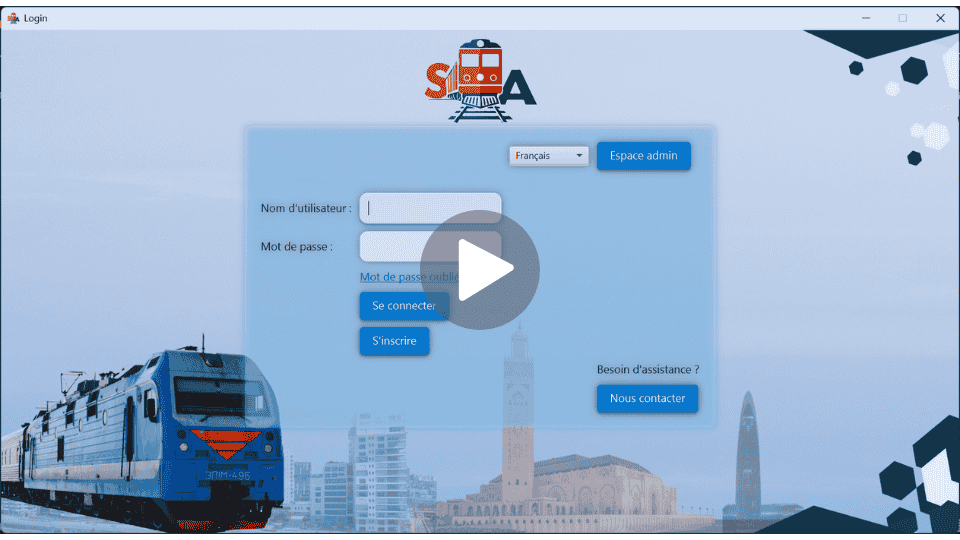
Our Object-oriented programming team developed a comprehensive Travel Agency Management Application designed to streamline the management of clients, reservations, itineraries, and secure payments. The application offers an intuitive and user-friendly interface, making travel arrangements more efficient for both administrators and users.

Application interface

Features

  1. User Authentication
    • User Login: Users can securely log in with their username and password.
    • User Registration: New users can create an account by providing personal details such as name, date of birth, phone number, and a secure password.
  2. Itinerary Search and Booking
    • Search Itineraries: Users can search for itineraries based on departure and arrival stations, as well as specific dates. The search results can be filtered by class (First or Second) and type of journey (One-Way or Round-Trip).
    • Booking Itineraries: Once an itinerary is selected, users can proceed with booking by entering the required details and confirming the reservation.
  3. Payment System
    • Payment Information: Users can enter payment details, including cardholder name, card number, expiration date, and CVV.
    • Payment Validation: The system securely processes the payment and confirms the reservation. Users receive a notification upon successful payment.
  4. Support and Assistance
    • Contact Support: Users can contact support via WhatsApp for assistance or password reset. A "Contact Us" button is available on key interfaces for easy access to support.

Admin Features

  1. Admin Authentication
    • Admin Login: Administrators have a separate login interface with special credentials for secure access.
    • Admin Registration: New administrators can create an account by providing additional information such as employee code and CIN number.
  2. Admin Dashboard
    • Manage Client Accounts: Administrators can view, modify, and delete client information. They can also search for specific clients by username.
    • Manage Itineraries: Administrators can add, modify, and delete itineraries, including details such as train number, departure and arrival stations, times, and ticket prices.
    • Manage Reservations: Administrators can view, confirm, and delete client reservations, with details such as reservation date, client name, and phone number.

Technologies Used

  • JavaFX: For the user interface, providing a smooth and responsive user experience.
  • MySQL: For database management, ensuring efficient data handling of users, itineraries, reservations, and payments.
  • JDBC: For database connectivity, enabling seamless interaction between the application and the database.
  • CSS: For customization of the application's appearance, delivering a visually appealing and professional interface.

Database Structure

    Key Tables

    • user: Stores user information including name, date of birth, phone number, username, and password.
    • admin: Stores administrator information including name, date of birth, phone number, employee code, CIN number, username, and password.
    • itinerary: Contains itinerary details including train number, departure and arrival stations, departure and arrival times, and ticket prices.
    • reservation_confirmation: Contains reservation details including client name, phone number, and reservation specifics.
    • payment: Contains payment details including cardholder name, card number, expiration date, and CVV.

Video Presentation

Below is a video presentation of the application showcasing its features:

Aperçu de la vidéo

Supervised by:

Fouad AYTOUNA

Team Members:

  • Taobata SIMPORE
  • Abdoul-Moumouni
    DIALLO
  • Doha BOUARRAF
  • Yousra MAKRI

Supervised by:

Pr. Fouad AYTOUNA

Resources of the project here : my github

section tiltle support

Solar Tracker AI-Driven System

Overview

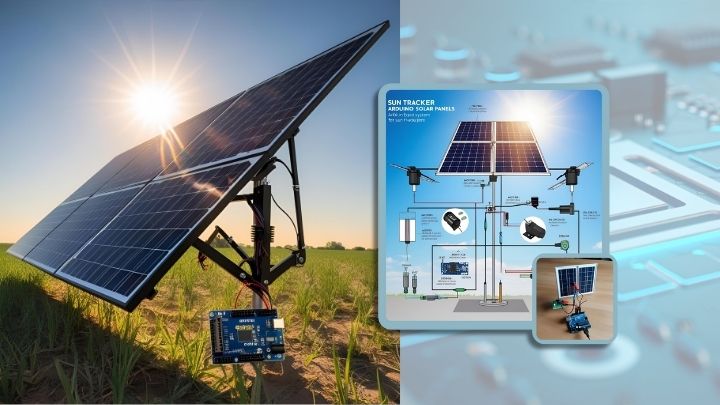
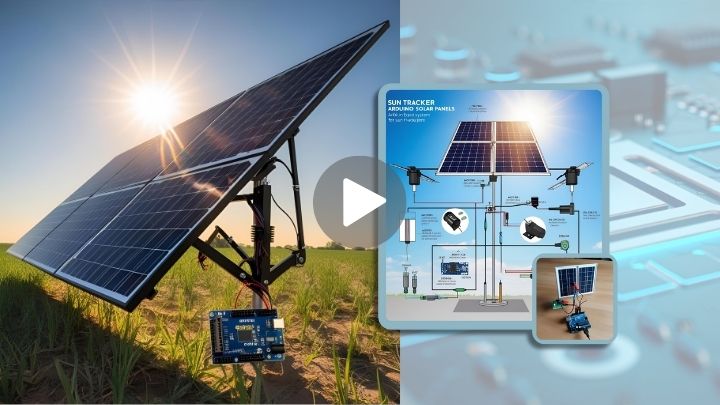
Solar Tracker AI-Driven System is an academic project developed as part of the module "Architecture des systèmes embarqués". This solution combines embedded electronics, cloud communication, and artificial intelligence to optimize solar panel performance.
By using real-time environmental data and predictive algorithms, the system automatically adjusts the orientation of a solar panel to maximize energy production.

Smart solar tracker

Objective

In the context of global energy challenges, our main goals were to:
  • Maximize photovoltaic energy output through smart orientation.
  • Maintain high efficiency despite variable weather.
  • Integrate advanced technologies like AI, IoT, and mobile development into a fully embedded system.
  • Build a user-friendly application on which real and predicted data will be displayed
This project demonstrates a practical implementation of classroom knowledge, offering a real-world solution for intelligent energy management.

Hardware Components

  1. Microcontrollers & Communication
    • ESP32: Collects sensor data (light, temperature, humidity) and sends it to the cloud (Firebase).
    • Arduino Uno: Receives data from the ESP32 via serial communication and controls the servo motor accordingly.
  2. Sensors & Actuators
    • LDR (Light Dependent Resistor): Detects sunlight intensity.
    • DHT11: Measures temperature and humidity.
    • Servo Motor: Rotates the panel based on sensor inputs to track the sun’s position.
  3. Circuit Design
    • A communication link between ESP32 and Arduino ensures accurate orientation adjustments based on real-time data.

Software Components

  1. Mobile App
    • Developed using Flutter & Dart, the app displays real-time data: sunlight, energy harvested, temperature, and humidity. It also shows AI-based predictions for solar activity.
  2. Backend & Cloud
    • With Firebase, the system securely stores and retrieves data in real time, enabling seamless communication between hardware and the mobile interface.
  3. Machine Learning Integration
    • A custom AI model uses historical data to predict solar patterns and recommend optimal tilt angles for the panel.

Key Features

  • Real-time solar tracking using LDR sensors.
  • AI-powered predictions for upcoming solar conditions.
  • User-friendly mobile interface with dynamic charts and live updates.
  • Cloud-based data management for reliability and scalability.

Results & Demonstration

Below is a video presentation of the system in action:

Aperçu de la vidéo

Supervised by:

Mr. Younes WADIAI

Team Members:

  • Taobata SIMPORE
  • Abdoul-Moumouni
    DIALLO
  • KUNAKA Daniel

Supervised by:

Mr. Younes WADIAI

Resources of the project here : my github
-- Full report in pdf